Chains#
A certificate is signed by a certificate company's middle certificate (also called intermediate), which is signed by the company's root. Browsers and Java have the roots; the server must send the certificate and the middle certificates. A server that sends only its certificate works in some browsers (they fetch what is missing) and fails in others, and in most programs (FTP clients, scripts, Java).
The chain of a certificate#
The Chain tab of a certificate in Certificates shows it as a tree, the certificate at the top:
| A step that is | Means |
|---|---|
| sent | in the file: the ports send it |
| not in the file, CrushMFT has it | a middle certificate CrushMFT knows: Fix chain adds it |
| missing, published at an address | the certificate names where its company publishes it: Fetch missing gets it |
| missing | nobody knows it: ask your certificate company for the bundle or chain file and Add a chain certificate |
| trusted by browsers and Java, not sent | the root: clients have it, so it is not sent (Java 27 refuses some clients when a root is sent) |
| a company's own certificate authority | fine for partners who trust that CA; browsers warn |
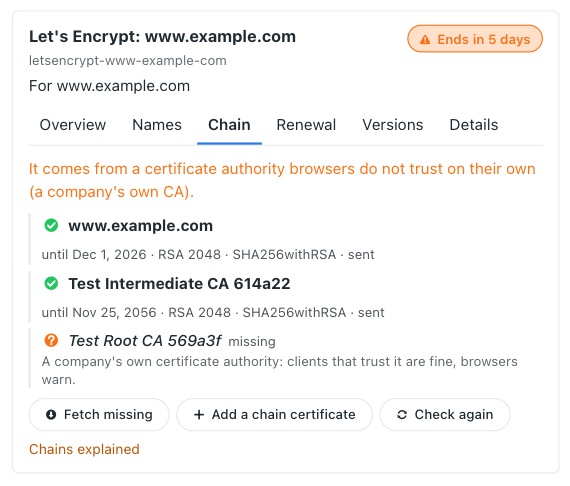
Fix chain and Fetch missing write the completed chain into the certificate's file, as a new version: the ports take it within a minute. A certificate company's middle certificate that ended is passed over for its newer version.
Where CrushMFT finds middle certificates#
- the files you drop together (the zip a company sends holds them)
- Chain certificates (Chain & trusted tab): every middle certificate CrushMFT fetched or you added
- Java's own roots
- the address in the certificate (Authority Information Access): fetched over the internet, through the proxy set for updates when one is set, and kept only when it really signed the certificate below it
What is fetched once is kept for the next certificate from the same company.
A private authority#
For certificates of your own certificate authority, add its root (and middle certificates) under Chain certificates. CrushMFT then completes chains with them, and trusts that root when it talks to an ACME authority of yours (Other authorities).
SHA-1#
A certificate in the chain signed with SHA-1 or MD5 is refused by current clients and by Java 27. The chain says which; ask your certificate company for the current chain.